

Celgen Biotech India
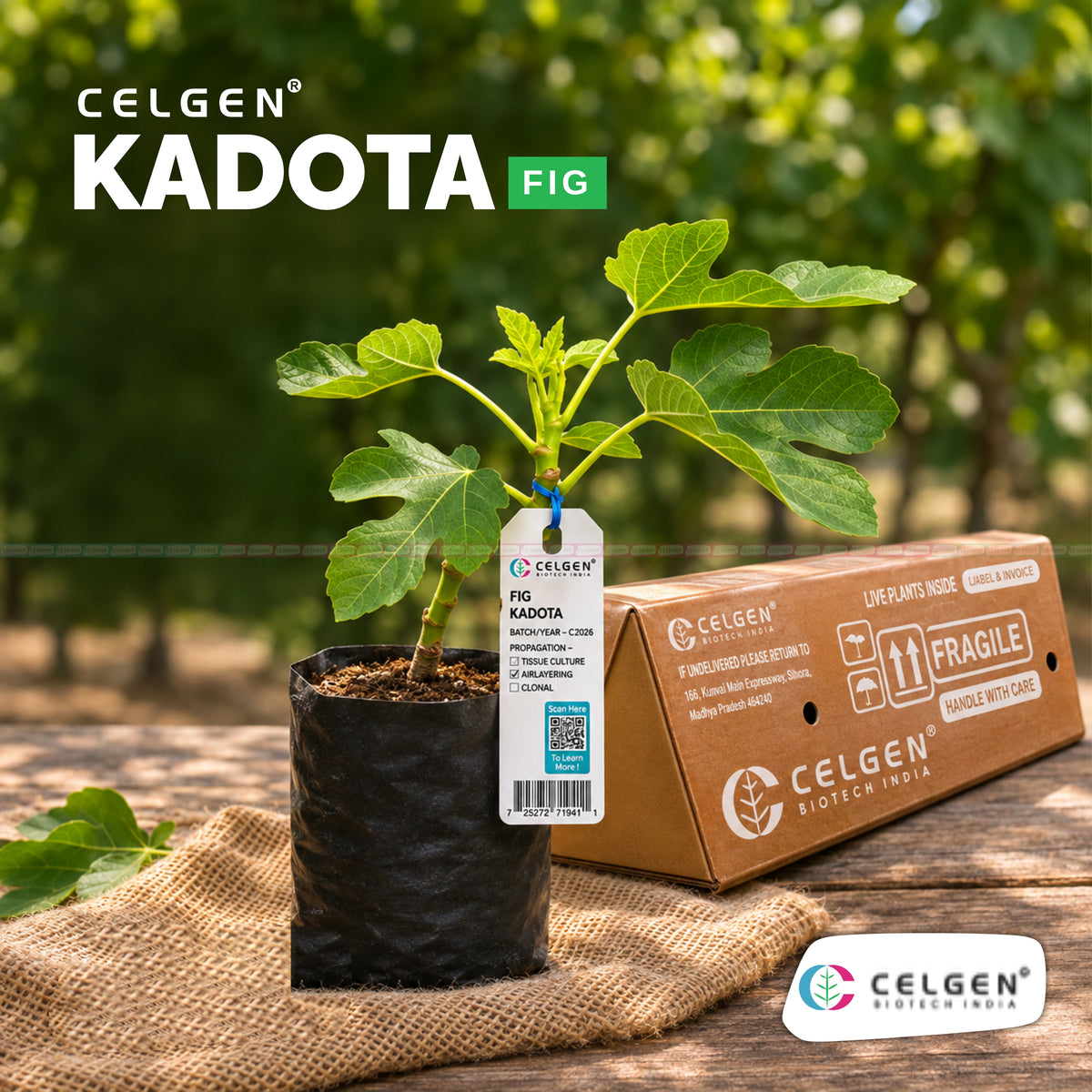
Celgen® Kadota Fig Plant – Classic Yellow-Green Fig
Celgen® Kadota Fig Plant – Classic Yellow-Green Fig
Couldn't load pickup availability
Celgen® Kadota Fig Plant – Classic Yellow-Green Fig
Traditional Dottato Selection | Honey-Sweet Fruit | Common-Type Fig
Discover Celgen® Kadota Fig, a classic cultivar of Ficus carica prized for its yellow-green skin, delicate amber pulp and sweet, honey-like flavour. With its Italian cultivar heritage, Kadota is the name used for the historic Italian fig Dottato, a traditional selection long cultivated in southern Italy and later established commercially in California. It is appreciated for fresh eating, preserves, canning and drying. Its light-coloured fruit makes it an appealing addition to a collection of named fig cultivars.
Variety Highlights
- Common-type fig: fruit can set without a fig wasp or a second fig variety
- Fruit skin: greenish-yellow, becoming more yellow at maturity
- Flesh: amber, sometimes pink-tinged near the centre
- Taste: pleasantly sweet with a mellow honey-like profile
- Uses: fresh fruit, preserves, canning and drying
- Growing preference: warm sites with good sunlight and drainage; relatively dry ripening weather favours quality
Product Details
| Botanical name | Ficus carica L. |
|---|---|
| Cultivar | Kadota (Dottato) |
| Cultivar heritage | Italy (Dottato); subsequently grown commercially in California under the name Kadota |
| Also known as | Florentine; White Kadota |
| Fig type | Common fig |
| Fruit skin | Yellow-green to golden-yellow |
| Fruit flesh | Amber; occasionally pink-tinged |
| Fruit size | Generally medium; varies by crop and conditions |
| Pollination | No fig wasp or separate pollinator required |
| Growth habit | Generally upright, with vigorous growth |
| Sunlight | Full sun, ideally 6–8 hours daily |
More About This Fig
Fruit Characteristics & Uses
Kadota fruit is usually rounded to pear-shaped with yellow-green skin and a soft amber interior. When properly ripened, the flesh is sweet and tender with a mellow honey-like flavour. Fruit weight, sweetness and colour can differ between growing seasons and locations; no fixed Brix or fruit-weight claim is made for the Celgen nursery batch.
Unlike tightly closed-eye cultivars, Kadota has a medium to relatively open ostiole; a sugary substance may partly seal it. Prolonged wet conditions can reduce fruit quality. This traditional cultivar has an established history of use in preserves, canning and drying, as well as fresh eating.
Pollination & Fruiting
Kadota is a common-type fig. Its main crop can develop without fig-wasp pollination or cross-pollination, so a single plant may fruit once mature and suitably grown. A breba crop on previous-season wood is variable: it can be light or absent in some climates and more substantial in others.
Fruiting and ripening dates depend on the local Indian climate, plant age, pruning and care. Harvest dates published for California or Mediterranean regions are not guaranteed calendars for India.
Where to Grow Kadota in India
Indicative climate-based guide, not an India-wide Kadota trial result:
- Warm inland districts: selected areas of Maharashtra, Karnataka, Gujarat, Madhya Pradesh, Rajasthan and Telangana may offer favourable conditions where the growing site receives full sun, good drainage and suitably dry ripening weather.
- Humid and high-rainfall areas: in districts of coastal Karnataka, Kerala, Goa, coastal Odisha, West Bengal and other humid regions, careful water management, canopy ventilation and protection of ripening fruit from prolonged rain become more important.
- Cold hill regions: young plants may require frost or winter protection; climate suitability depends on altitude, minimum temperatures and local microclimate.
Important: states contain widely varying climates. This is general fig-growing guidance and does not establish confirmed Kadota performance in every state or district. Local cultivation trials are recommended for commercial orchards.
Planting & Care
- Sunlight: choose a full-sun site with approximately 6–8 hours of direct light.
- Soil: fertile, well-drained soil or a well-draining container substrate; avoid standing water.
- Watering: irrigate consistently during establishment while preventing prolonged waterlogging.
- Feeding: provide balanced nutrition appropriate to growth; avoid excessive nitrogen.
- Pruning: maintain an open, manageable canopy and remove dead or crossing shoots; consider breba production when pruning older wood.
- Containers: grow in a sufficiently large container with drainage, upsizing as the root system develops.
- Orchards: determine spacing and training based on your local conditions and intended production system.
Plant Specifications & Propagation
Celgen supplies this named Kadota fig selection in two vegetatively propagated plant forms. Both are intended to retain the distinguishing characteristics of the selected mother cultivar. The propagation method alone does not guarantee faster fruiting, higher yield or superior fruit quality.
Rooted Fig Plant — Air-Layered or Cutting-Grown
Supply specification: Single Rooted Plant | 1-Quart Grow Bag | 6–12 Inches | ~4 Months Old.
Rooted fig plants are propagated conventionally from selected Kadota mother-plant stems, either by air layering (inducing roots while the shoot is still attached to its mother plant) or by rooting stem cuttings in a controlled nursery environment. These are clonally propagated, own-rooted plants, not seedlings or grafted plants.
Benefits: Established horticultural methods that maintain the mother cultivar's identity when correctly propagated; the plant develops its own roots without a graft union; and plants can be nurtured and pruned in a familiar manner. Natural differences in rooting pattern and shoot development may occur between air-layered and cutting-grown plants.
Tissue Culture Hardened Plant — In-Vitro Propagated
Supply specification: Single TC Plant | 1-Quart Grow Bag | 6–12 Inches | ~4–6 Months Old.
Produced by in-vitro multiplication of selected Kadota plant material under controlled conditions, followed by root establishment, acclimatization and nursery hardening. Plants are supplied after adaptation from the in-vitro environment to nursery growing conditions.
Benefits: Supports systematic multiplication of selected plant material, uniform production practices and controlled early-stage growth. Proper laboratory hygiene and testing can support plant-health management; however, tissue culture alone does not establish that plants are certified virus-free or free of every pathogen.
Which Propagation Type Should You Choose?
Both are intended as true-to-type Kadota plants. Choose the rooted or tissue-culture hardened option according to your preference and the available nursery batch. Both are living plants with their own developed root systems; neither method on its own guarantees a better tasting fruit, earlier bearing or higher yield. Plant height and appearance can vary naturally within the stated nursery ranges.
Frequently Asked Questions
Does Kadota need a fig wasp? No. Kadota is a common-type fig that can set fruit without pollination.
Can Kadota grow in a pot? Yes, with a suitably large, well-drained container, sunlight, water and pruning.
Does it tolerate heavy monsoon rain? The plant can be cultivated in suitable sites, but prolonged wet weather can adversely affect ripening fruit quality. Drainage and ventilation are important.
When will my plant start fruiting? Timing depends on plant age, propagation, climate, establishment and management; no fixed bearing-age guarantee is offered.
Shipping & Arrival Care
Open the package carefully, inspect the stem and growing medium, and keep the plant in a bright, protected location while it adjusts after transport. Acclimatise gradually to stronger sunlight. Water according to the moisture content of the substrate, without saturating it unnecessarily.
Leaf drop may occur after shipping or during seasonal dormancy and is not by itself proof that a fig plant is dead. If a plant arrives damaged or shows worrying symptoms, contact Celgen promptly with clear images or a continuous video, in accordance with the applicable replacement policy.
Why Choose Celgen?
Celgen Biotech India specialises in named fruit cultivars and nursery-raised planting material. Our aim is to offer clearly described plant material with accurate specifications, responsible aftercare guidance and cultivar-specific information.
Important: Fruit size, yield, colour, sweetness, season, appearance and performance depend on growing conditions and plant maturity. No guaranteed yield, Brix, fruiting date or universal regional suitability is claimed.
Celgen Biotech India
www.celgenbiotech.com
Share