

CELGEN biotech
Celgen® Macdonaldiae (MAC) Dragon Fruit Plant
Celgen® Macdonaldiae (MAC) Dragon Fruit Plant
Couldn't load pickup availability
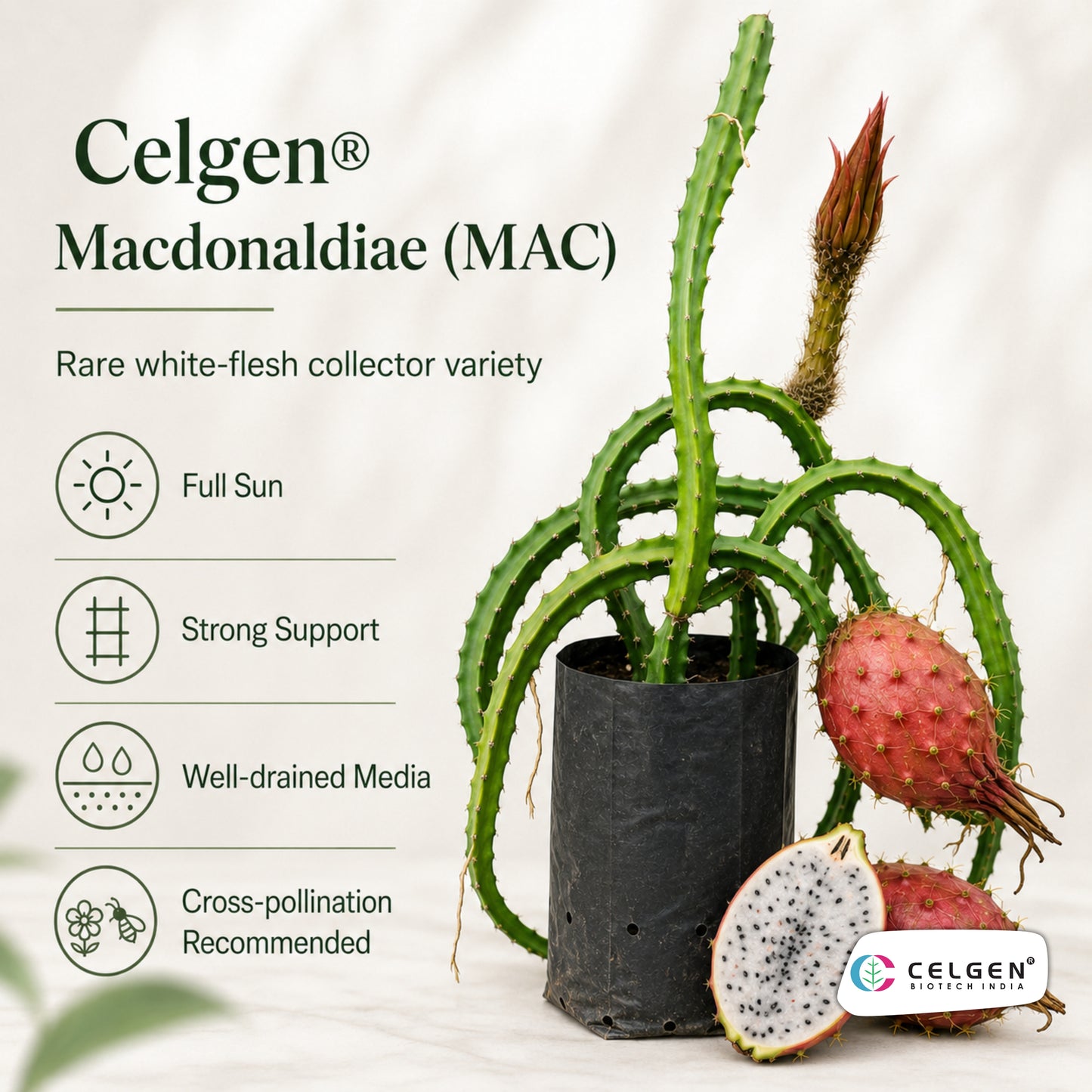
Celgen® Macdonaldiae (MAC) Dragon Fruit is a rare collector-type dragon fruit variety known for its unique spiny fruit appearance, white flesh, and specialty germplasm value. This variety is different from regular commercial dragon fruit types and is suitable for exotic fruit collectors, terrace growers, home gardens, and rare variety trial plantations.
Origin & Variety Information:
Macdonaldiae, commonly referred to as MAC, is identified as Selenicereus macdonaldiae. It is a rare Selenicereus-type dragon fruit known for producing comparatively small fruits with a reddish-brown to brownish outer skin, spiny fruit surface, and bright white flesh inside.
This variety is mainly valued as a rare collector variety and specialty dragon fruit type. It should not be confused with Makisupa, Big Mac, or Taiwan Big Mac, as those are different red-flesh or jumbo-type dragon fruit varieties.
Key Highlights:
• Rare Selenicereus-type dragon fruit variety
• Also known as MAC / Macdonaldiae
• Produces small to medium spiny fruits
• White flesh fruit type
• Unique reddish-brown to brownish outer fruit appearance
• Suitable for exotic fruit collectors and rare variety growers
• Best suited for trial planting and germplasm collection
• Strong support structure is required for proper growth
• Cross-pollination is recommended for reliable fruit setting
Why Choose Celgen® Dragon Fruit Plants?
Celgen Biotech focuses on supplying healthy and well-rooted dragon fruit plants prepared from selected and maintained mother stock. Each plant is handled with proper nursery care before dispatch and packed carefully for safe transportation.
Our aim is to provide growers with genuine, well-maintained planting material along with basic guidance for planting, support structure, nutrition, and care. Whether you are a home gardener, terrace grower, collector, or trial plantation grower, Celgen® plants are prepared to support better establishment after planting.
Fruit & Plant Information:
Macdonaldiae (MAC) is a rare white-flesh dragon fruit variety known for its distinctive spiny fruit appearance. The fruit is generally smaller than many commercial dragon fruit varieties and develops a reddish-brown to brownish outer skin with visible spines or spine clusters. The inner flesh is bright white with small black seeds.
Fruit Flesh Colour: Bright white
Outer Skin Colour: Reddish-brown to brownish type
Fruit Surface: Spiny / thorny outer appearance
Fruit Size: Small to medium type
Taste Profile: Sweet and unique flavour profile under proper ripening conditions
Growth Habit: Climbing cactus-type fruit plant
Stem Character: Slender, ridged Selenicereus-type growth
Pollination: Cross-pollination recommended for reliable fruit setting
Support Requirement: Strong pole or trellis support required
Suitable For: Rare fruit collectors, home gardens, terrace gardens, specialty growers, and trial plantations
Growing Requirement: Full sunlight, well-drained soil or media, controlled irrigation, and proper nutrition
Planting & Care Guide:
Plant the sapling in a sunny location with good air movement. Use well-drained soil or potting media and avoid waterlogging. Dragon fruit plants grow as climbing cactus vines, so they require a strong pole or trellis support.
For better growth and flowering, provide full sunlight, proper support, balanced nutrition, and controlled irrigation. During flowering and fruiting stage, potassium and calcium-based nutrition can support better fruit development.
For better fruit setting, plant Macdonaldiae (MAC) with other compatible dragon fruit varieties nearby and perform hand pollination during flowering.
Important Note:
Macdonaldiae (MAC) is a rare collector variety and should not be compared with regular jumbo commercial dragon fruit varieties. Fruit size, colour, sweetness, yield, and fruiting behaviour may vary depending on climate, plant maturity, pollination, and cultivation practices.
Disclaimer:
Fruit size, colour, sweetness, yield, and fruiting time may vary depending on climate, plant age, nutrition, pollination, and growing practices. Variety information is provided based on source identity, nursery observation, customer/field observation, and available cultivar references.
Share